
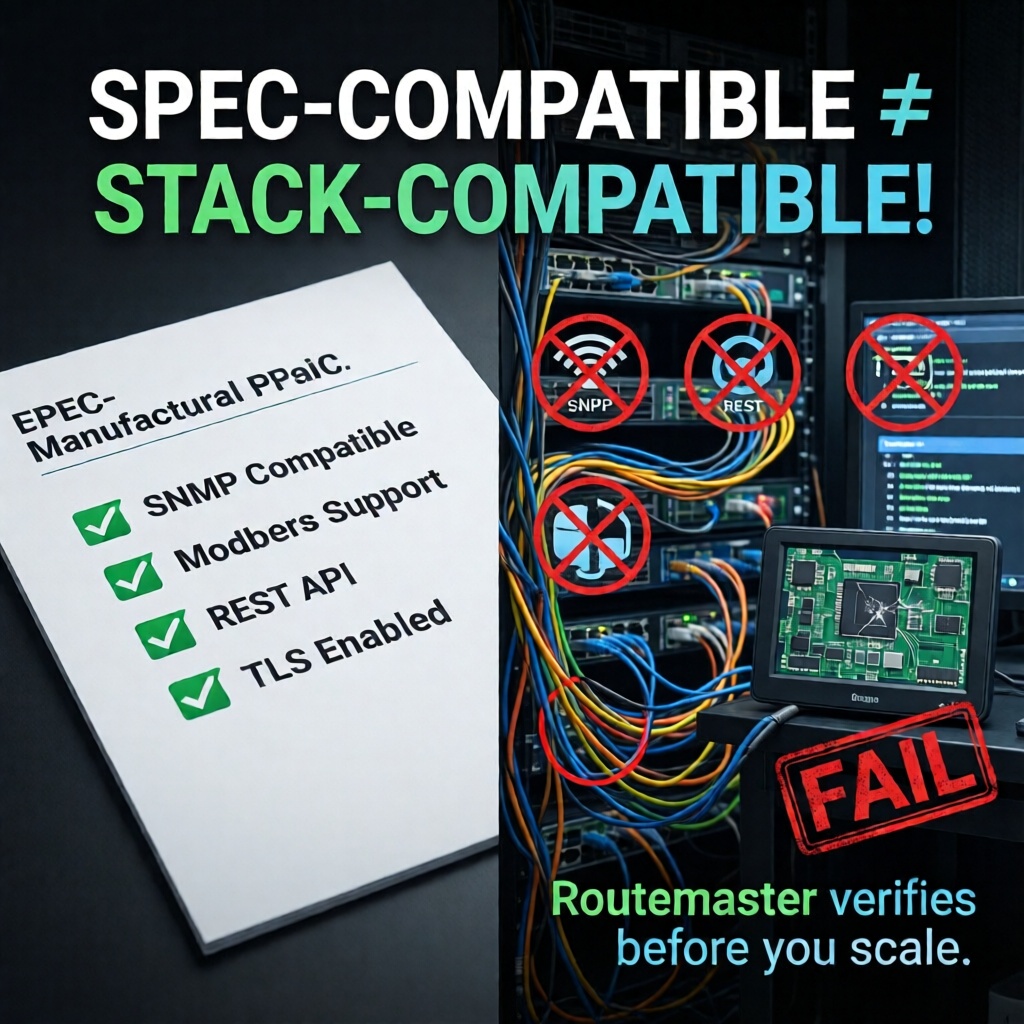
3 Integration Failures We Catch Before Your DCIM Goes Live (China Hardware Edition)
Flagged another "SNMP-compatible" PDU. Manufacturer's spec sheet checked every box. Actual testing? The implementation was incomplete — missing OIDs, non-standard trap formats, firmware that crashed under polling load.
The hardware worked fine in isolation. It just didn't work in their stack.
Here's what procurement teams miss when they skip software-level verification:
1.
Protocol stacks that don't stack up.
"Modbus support" that implements 40% of the spec. REST endpoints returning malformed JSON. SNMP agents reporting stale data. Your DCIM expects standards compliance — many devices deliver "creative interpretations."
2.
API documentation drift.
The integration guide shows v2.1 firmware features. The hardware ships with v1.8. Your automation scripts fail, your monitoring dashboards go blank, and you're debugging someone else's firmware on a Tuesday night.
3.
Authentication theater.
TLS support that's broken. OAuth flows that don't flow. Hardcoded credentials buried in firmware. Security isn't what the datasheet claims — it's what packet inspection reveals.
Routemaster's verification engineers test hardware the way your software actually uses it. We validate protocol reality against your specific DCIM, BMS, and monitoring platforms — before you commit to 500 units across three facilities.
Because discovering integration failures after deployment is 10x more expensive than catching them in Shenzhen.
What's your worst hardware-software integration surprise?